The History of Lebkuchen: Germany's Beloved Spiced Cookie
As the scent of cinnamon, cloves, and honey fills Christmas markets across Germany, one treat stands out as a true symbol of the season: Lebkuchen. These aromatic spiced cookies have been delighting Germans for centuries, carrying with them a rich history that stretches back to medieval times.
Monastic Origins
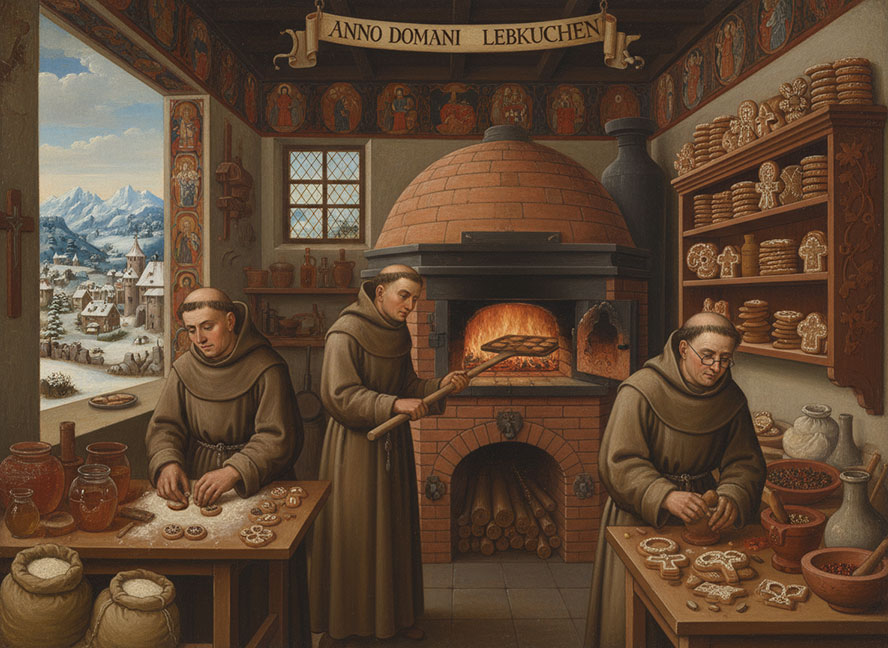
The story of Lebkuchen begins in the monasteries of 13th-century Franconia. Monks, who had access to exotic spices through trade routes and possessed the knowledge of baking, created these honey-sweetened cakes as both sustenance and medicine. The name "Lebkuchen" likely derives from the Latin "libum" (flat cake) or possibly from "Laib" (loaf), though some suggest it comes from the German word "Leben" (life), reflecting the cookies' once-attributed healing properties.
Why monasteries had greater access to spices:
Monasteries were among the wealthiest and most connected institutions in medieval Europe. They had international networks through the church hierarchy, connecting them to trading hubs and other monasteries across Europe and even the Mediterranean. Unlike ordinary households, monasteries could afford to purchase expensive imported spices that arrived via Venetian and Genoese merchants who controlled the spice trade from Asia and the Middle East. These spices were extraordinarily costly—sometimes worth more than gold by weight—putting them far out of reach for average families.
Additionally, monasteries often received spices as gifts or tithes from wealthy patrons seeking favor with the church. This gave monks access to ingredients that peasants and even many townspeople would never encounter in their lifetimes.
Why monks developed these cookies rather than households:
Several factors made monasteries the ideal birthplace for Lebkuchen:
- Literacy and recipe preservation: Monks could read and write, allowing them to document recipes and refine techniques over time. Most households relied on oral tradition and had no way to record complex recipes.
- Time and resources: Monastic life provided the leisure time for experimentation that peasant households—focused on survival and subsistence farming—simply didn't have.
- Beekeeping expertise: Many monasteries kept extensive beehives for beeswax (used in candles) and honey, giving them abundant access to the key sweetener in Lebkuchen.
- Medical knowledge: Monks were often the educated healers of their time. They understood spices not just as flavoring but as medicine, creating these spiced cakes partly for their supposed therapeutic properties.
- Baking infrastructure: Monasteries had proper ovens and baking facilities, which were rare in ordinary homes where most cooking happened over open fires.
So really, monasteries were like the research and development centers of medieval Europe—they had the resources, knowledge, connections, and motivation that made culinary innovation possible!
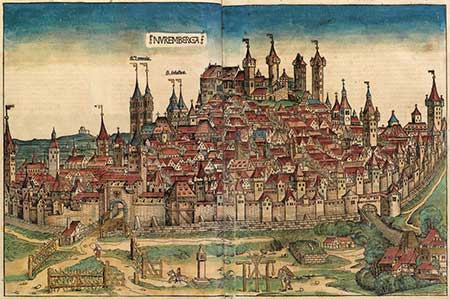
Nuremberg: The Lebkuchen Capital
By the 14th century, Nuremberg had established itself as the heart of Lebkuchen production. The city's location at the crossroads of major trade routes gave bakers access to precious ingredients like pepper, cinnamon, cardamom, and ginger from distant lands.
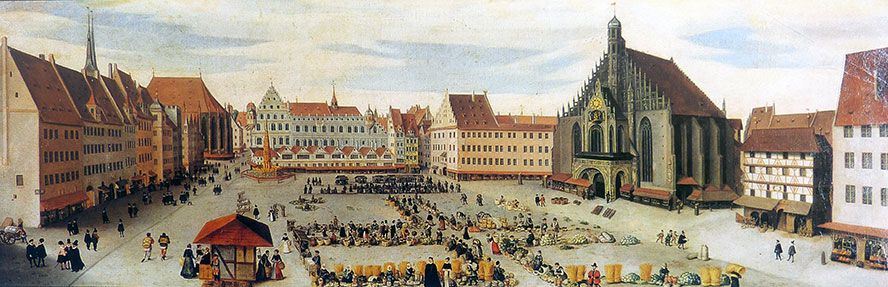
1594: Nuremberg Market scene (painting by Lorenz Strauch)
Von Lorenz Strauch - Photo from a reproduction, CC BY-SA 4.0, Link
This is a painting of the Hauptmarkt in Nuremberg where spices were traded.
The spices were very expensive even more than gold by weight,
because they traveled from ship to land from India, China and Indonesia,
and they packed on horses and wagons for the long trip up to Germany.
Honey a main ingredient in early Lebkuchen
The nearby forests provided abundant honey from beekeepers, making Nuremberg ideally situated for Lebkuchen production.
Long before sugar was common, honey gave Lebkuchen its sweetness and depth. Monks mixed flour and honey, then let the dough rest for weeks. This slow aging allowed natural enzymes and wild yeasts to work, creating a lighter texture and richer flavor. Honey also kept the cookies moist and preserved them for long storage—perfect for festive seasons.
Lebkuchen Guild
In 1395, Nuremberg's bakers formed one of the first documented Lebkuchen guilds, strictly regulating the craft. The city became so renowned for its Lebkuchen that "Nürnberger Lebkuchen" earned protected status, meaning only Lebkuchen made within the city limits could bear this prestigious name.
Why was a guild so important?
SImilar in someways to a union today or a patent for a signature product, the guilds controlled the quality of what could be called Lebkuchen and sold, also controlled the training and apprenticeship to become a certified "Lebkuchener" much like you would get a license today. Each company held their recipes and techniques secret.
From Monastery to Market
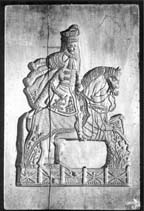
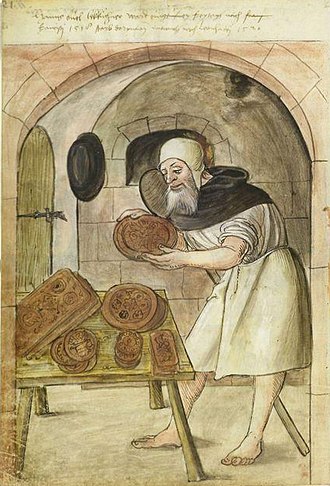
What began as a monastic specialty gradually became available to the broader public. By the 16th century, Lebkuchen had evolved from simple rounds into elaborate shapes decorated with images of saints, coats of arms, and eventually, the intricate designs we associate with Christmas today. Bakers began using special wooden molds to create decorative impressions, transforming simple cookies into edible art.
|
 |
 |
A Christmas Tradition Takes Hold
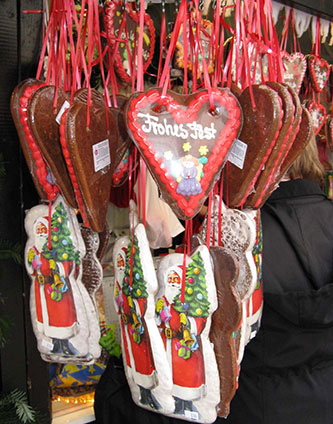
The strong association between Lebkuchen and Christmas developed over centuries. The cookies' long shelf life made them ideal for baking weeks in advance of the holidays. Additionally, the warming spices were believed to have medicinal properties particularly beneficial during cold winter months. As Christmas markets flourished in the 18th and 19th centuries, Lebkuchen became an essential seasonal treat. |
Lebkuchen Today
Today, Lebkuchen remains a cherished part of German Christmas traditions. While Nuremberg continues to be the most famous production center, variations exist throughout German-speaking regions. From the soft, dome-shaped Elisenlebkuchen (which must contain at least 25% nuts) to the crisp, rectangular Lebkuchen covered in chocolate or sugar glaze, these cookies continue to evolve while honoring their medieval roots.
Whether enjoyed plain, glazed, or dipped in chocolate, each bite of Lebkuchen connects us to centuries of German baking tradition—a sweet reminder that the best recipes truly stand the test of time.
|



 \
\