Backtag — Baking Day in the Streib Household
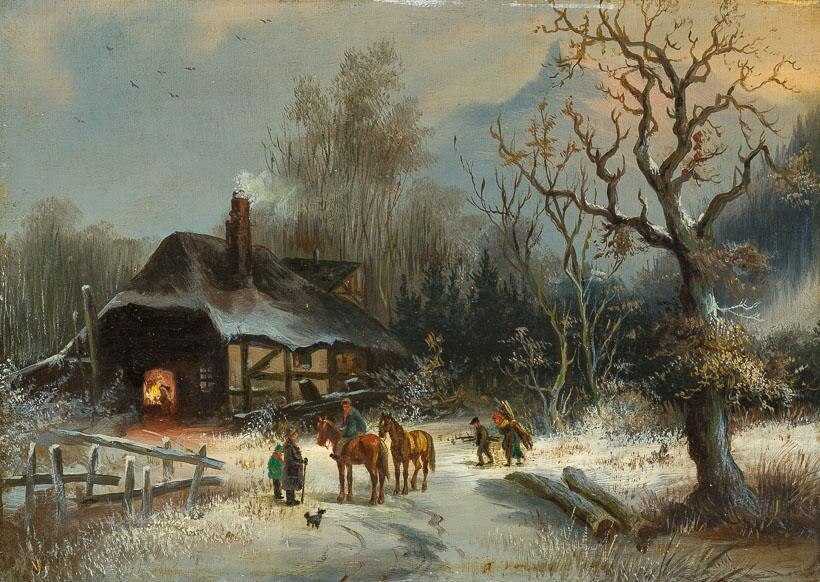
January dawned slowly over Steinsfurt, the pale winter sun struggling to break through the sky, the color of gray cloudy and misty, a normal January morning. Frost clung to the fields, turning every fencepost and rooftop into a glittering silhouette. Inside the Streib farmhouse, the air was cold enough that you could see your breath until the hearth came alive.
The Mother, Eva Streib knelt at the fireplace, coaxing the embers from last night’s fire. She fed them thin sticks of birch kindling until the flames caught, crackling softly. Today was Backtag (Bake Day), and the house would soon be bustling.
The Father, Phillip stepped in from the barn, brushing snow from his shoulders. “Cold enough to freeze the milk in the pail,” he said, stamping his boots.
Eva smiled. “Then it’s a good day for bread.”
Morning Chores and the Bread Dough
The children began to stir in the loft above. Soon the kitchen filled with sleepy footsteps and woolen stockings:
Ludwig, already pulling on his boots, Sophie, braiding her hair with practiced fingers, Emma, rubbing sleep from her eyes, Jacob and Heinrich, arguing about whose turn it was to fetch water, Lena, carrying little Carolina, still half‑asleep, Barbara, shivering as she wrapped her shawl tighter
Eva opened the flour chest. Inside were two sacks: one of coarse rye flour, plentiful and dark, and one of wheat flour, lighter and precious. She measured mostly rye with a careful scoop of wheat — enough to soften the loaves but not enough to waste.
From the stoneware crock near the hearth, she lifted the lid of the family’s Sauerteig. The sourdough was alive and bubbling, smelling faintly of apples and earth.
“Is it awake, Mutti?” Carolina whispered.
Eva nodded. “It’s always awake. It’s what makes our bread rise.”
She mixed the flours, water, and sourdough in the wooden trough. The dough was heavy and sticky — rye always clung to the hands — but Eva and Sophie worked it with practiced rhythm. Soon Barbara joined, pushing the dough with small but determined hands.
This was a big Backtag. With ten mouths to feed, Eva shaped eight large loaves, each nestled into its own Bratform, dusted with rye flour, and covered with linen cloths. They would rise slowly in the warm corner near the hearth.
|
|
 |
“The Rattle of Summer, the Warmth of Winter”
While the dough rested, Eva turned to the day’s meal. From the root cellar she brought up, Carrots, Celery Root, and there was still a few leeks left in the ground braving the snow, so Eva pulled up one, shaking off the frigid soil. Knowing this was going to be a busy day she sent Ludwig back to the cellar to get a few potatoes for the soup.
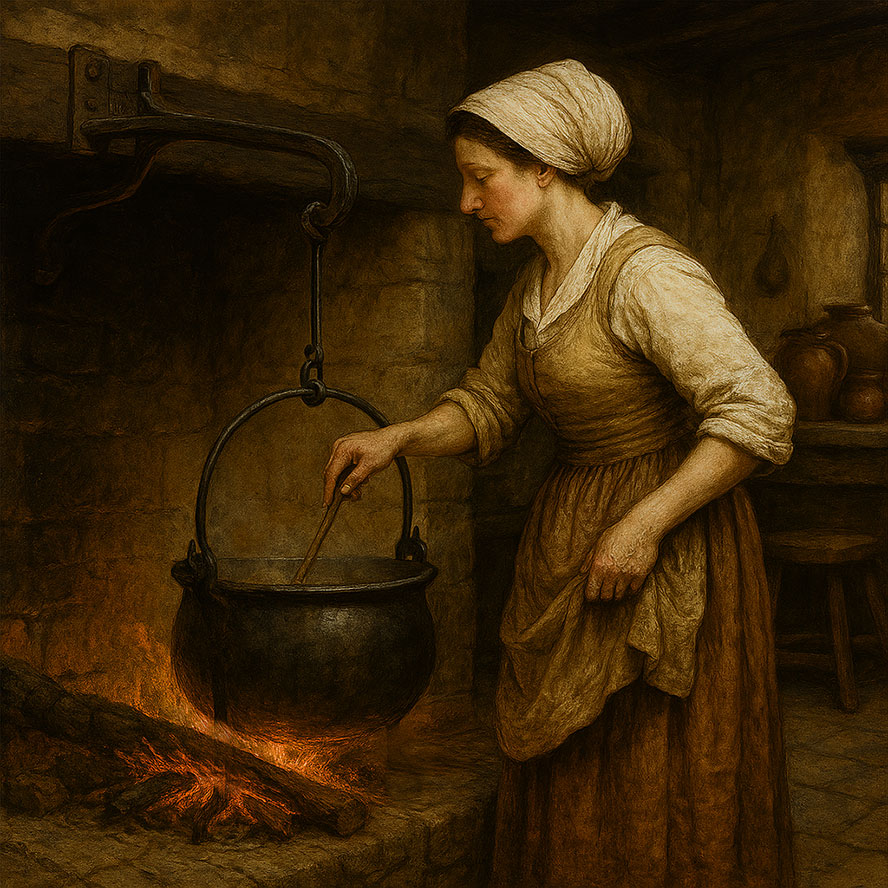
Phillip cut a small piece from the slab of smoked bacon hanging from the rafters — not much, but enough to flavor the pot. The bacon sizzled in the iron kettle, filling the kitchen with a warm, smoky scent.
|
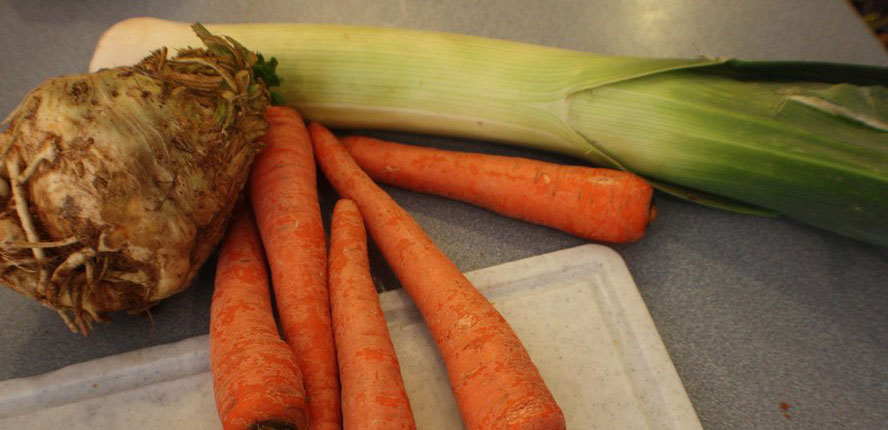
The "Holy Trinity" or Mirepoix of German soup cooking
Suppengruen or soup greens
They are vegetables that can last through the winter in a root cellar
or last in the snow like leeks and cabbage
Go Here to read about and learn to use Suppengruen (Soup Greens)
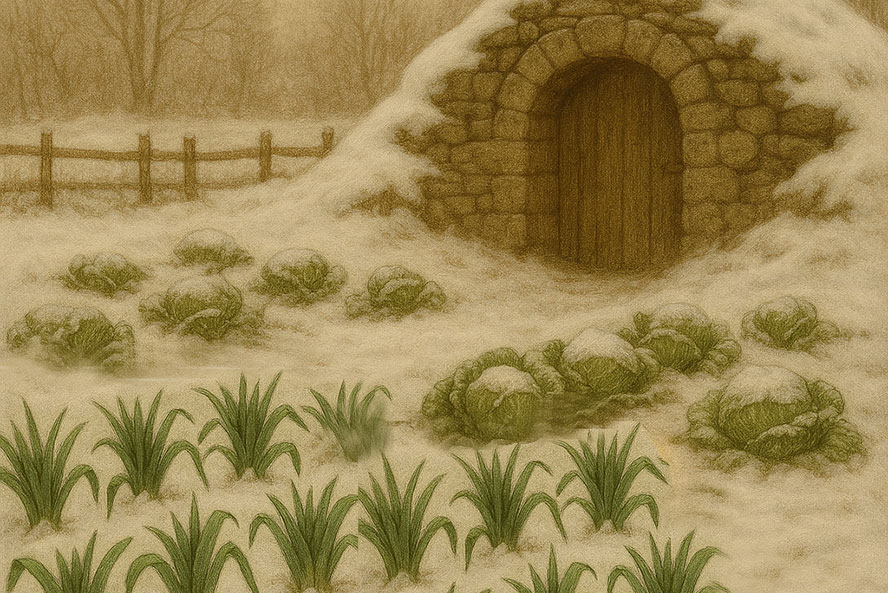
Leeks and cabbage are 2 vegetables that can last even in the snow.
Go here to learn more about
German's "Holy Trinity" of vegetables
and make your own Suppengruen
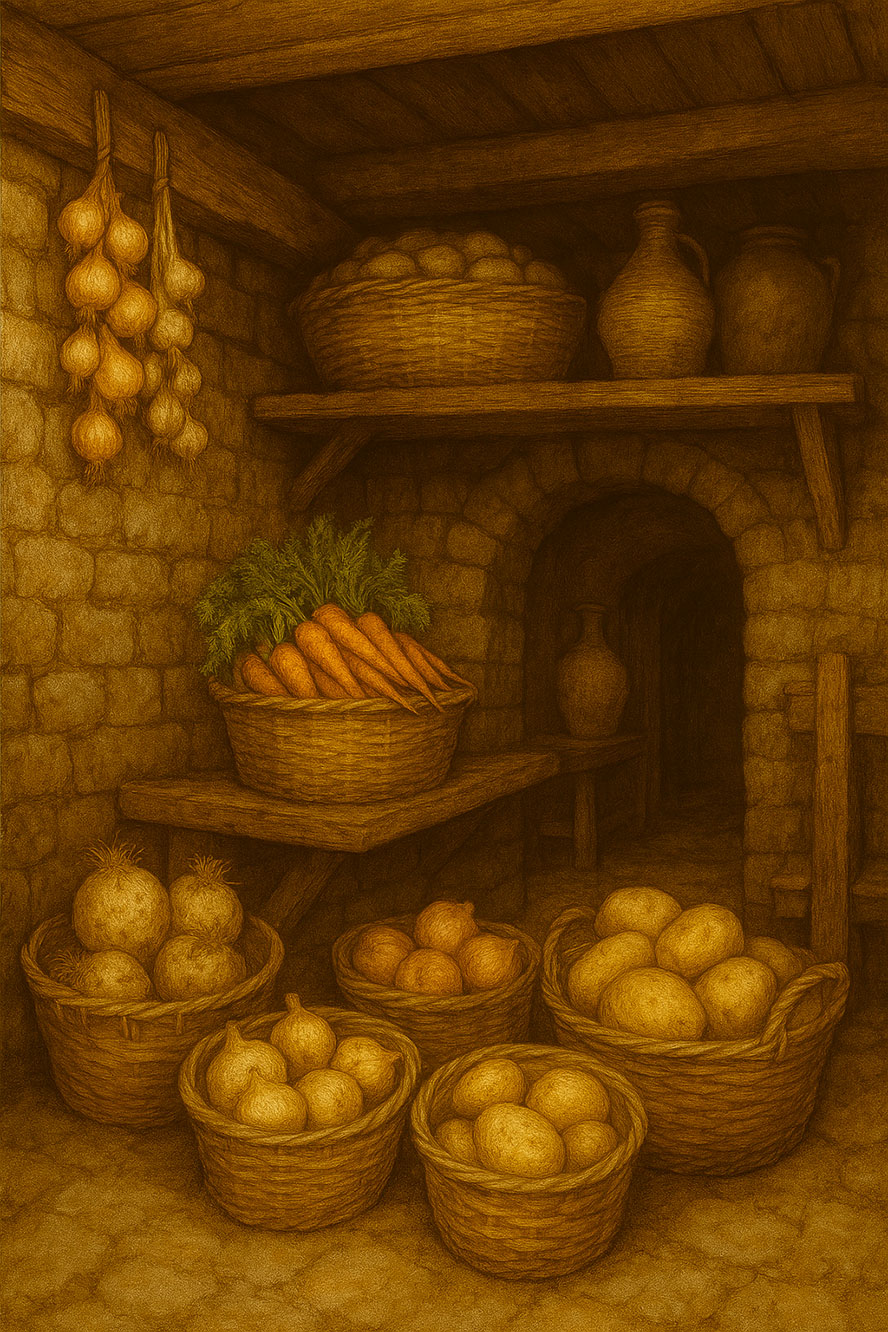
Inside the Streib's Root Cellar
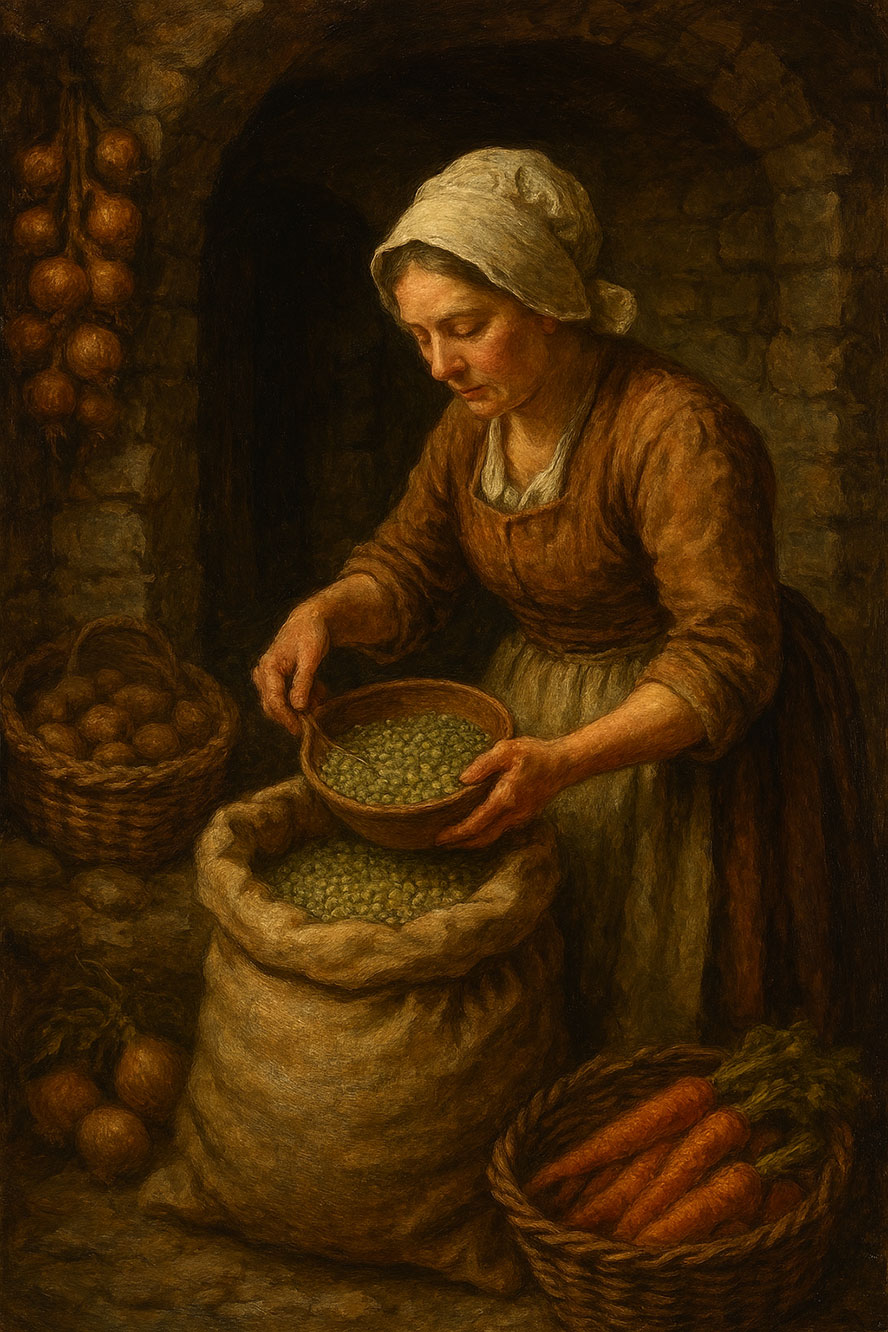 |
Eva reached for the sack of dried peas. As she scooped them into her hand, the familiar rattle of the hard little peas stirred a memory — a warm echo of summer in the cold January kitchen. Just a few months earlier, the fields behind the Streib farmhouse had been buzzing with life.
The pea vines, once green and tender, had turned golden and brittle under the August sun. Whne the pods rattled like tiny drums, Phillip declared it was time.
at the left, Eva scooping out some of the dried peas from the harvest in fall. |
|
“Children,” he called, “today we gather the peas.”
The Streib children tumbled out of the house like a flock of sparrows. Ludwig and Jacob carried the sickles, careful and proud. Sophie and Emma brought the twine. Heinrich, Lena, and Barbara followed with baskets swinging from their arms. Little Carolina toddled behind, determined to help even if she wasn’t quite sure how.
The air was warm and sweet, the kind of day that made the whole world smell of hay and sunshine.
Phillip showed them how to cut the vines low and gather them into bundles. The children worked in pairs, laughing as the dry pods crackled under their fingers.
“Listen,” Jacob said, shaking a bundle. “They’re already singing.”
Eva spread large linen cloths in the courtyard, and the children laid the bundles across them. The peas needed air and warmth, nothing more. As the sun climbed higher, the pods grew crisp, and the peas inside hardened to the perfect rattle.
In the afternoon, Phillip carried the dried bundles to the barn loft. The children followed, climbing the ladder one by one. The loft smelled of hay, dust, and the faint sweetness of drying grain.
“All right,” Phillip said, handing each child a stick. “Time to shell them.”
The children whooped with delight. They beat the bundles gently, sending peas scattering across the cloth like tiny green marbles. Carolina squealed every time one bounced her way.
When the pods were empty,
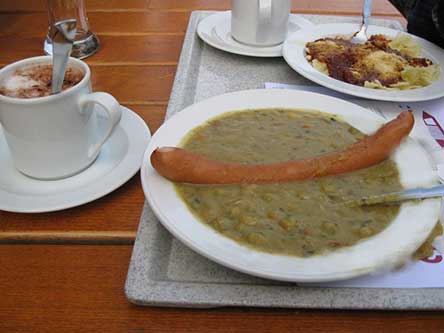
Make Split Pea Soup |
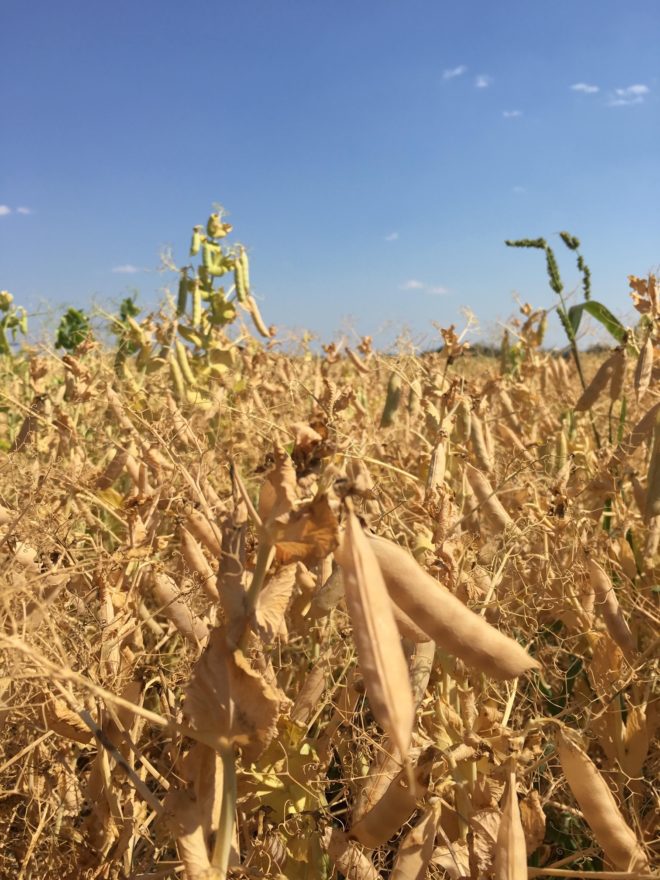
Eva sifted the peas through a woven basket, letting the chaff fall away. The peas clattered into a wooden bin — a sound that meant security, warmth, and full bellies in the months to come.
“Remember this,” Phillip told them, brushing straw from his sleeves. “What we do today feeds us in winter.” |
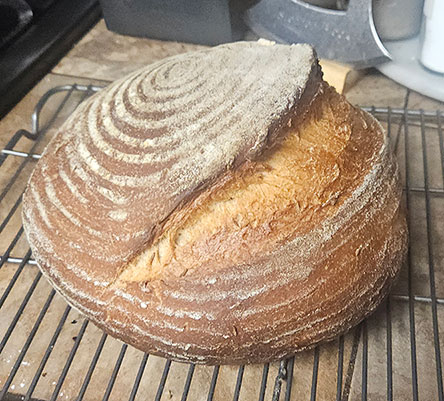
Make some Rye Bread |
Eva’s mind turned her focus from the happy memory back to the task at hand, dinner for the family of 9. The base was done, the bacon, peas and vegetables, the soup would simmer all day, thickening slowly as the family worked.
The Walk to the Baker
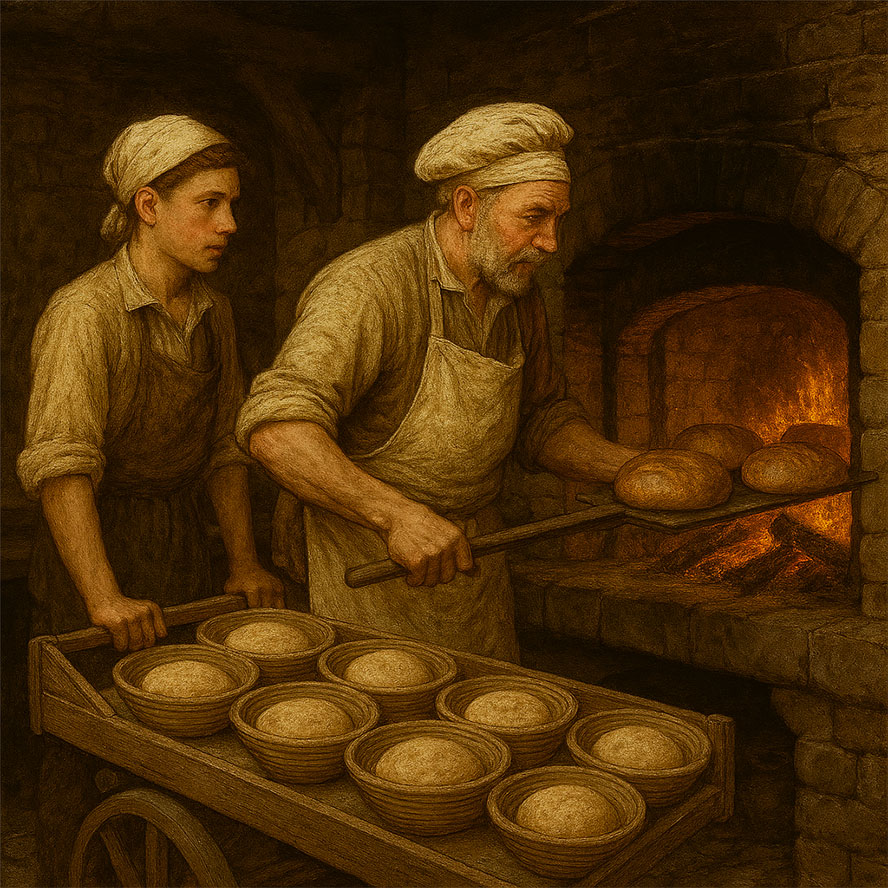
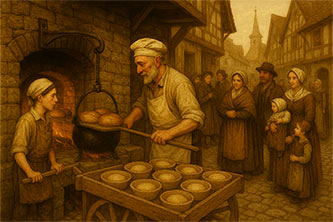
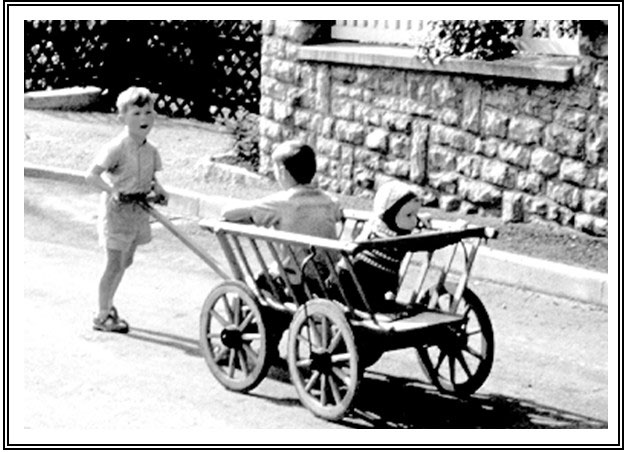
When the dough had risen, Phillip and the boys loaded the eight Bratformen onto the small wooden farm wagon. The wagon creaked under the weight — rye dough in wooden forms was no small burden.
“Ludwig, Jacob — with me,” Phillip said. “The baker’s oven will be ready.
The boys scrambled to pull on their wool caps. Jacob opened the door, letting in a blast of icy wind that made the fire flicker and the younger children squeal.
“Close it, close it!” Sophie cried.
Outside, the village was waking: smoke curling from chimneys, a neighbor sweeping snow from her doorstep, the church bell marking the hour, oxen being led toward the fields
Their boots crunched through the thin crust of snow as they pulled the wagon down the narrow lane. The cold air bit at their cheeks, but the rising loaves warmed Phillip’s hands through the wooden handles.
As they neared the center of Steinsfurt, the smell reached them first — the unmistakable scent of a wood‑fired oven, already burning hot.
“Mutti says the baker’s oven could warm the whole village,” Jacob said.
Phillip chuckled. “A good oven is worth more than gold in winter.”
|
They rounded the corner and saw the bakery: a low stone building with a thick chimney and a wide wooden door propped open to let out the heat. Several villagers were already gathered, many with their own wagons or handcarts piled with dough. |
 |
“Guten Morgen, Phillip,” called Bäckermeister Vogel, flour dusting his beard. “A fine Backtag for the Streibs, I see.”
Phillip grinned. “8 loaves this week. These children eat like oxen.”
The baker lifted the cloth from one of the loaves and nodded. “Good rise. Eva knows her dough.”
“Always has,” Phillip said proudly.
One by one, Vogel slid the Streib loaves into the great stone oven. The heat shimmered like a mirage, and the boys leaned forward, mesmerized.
Phillip reached into the wagon and handed Vogel one of the loaves. “Your share,” he said.
The baker accepted it with a nod. “Fair trade. Come back this afternoon — they’ll be ready, dark crust and good spring.” |
 |
Home Again
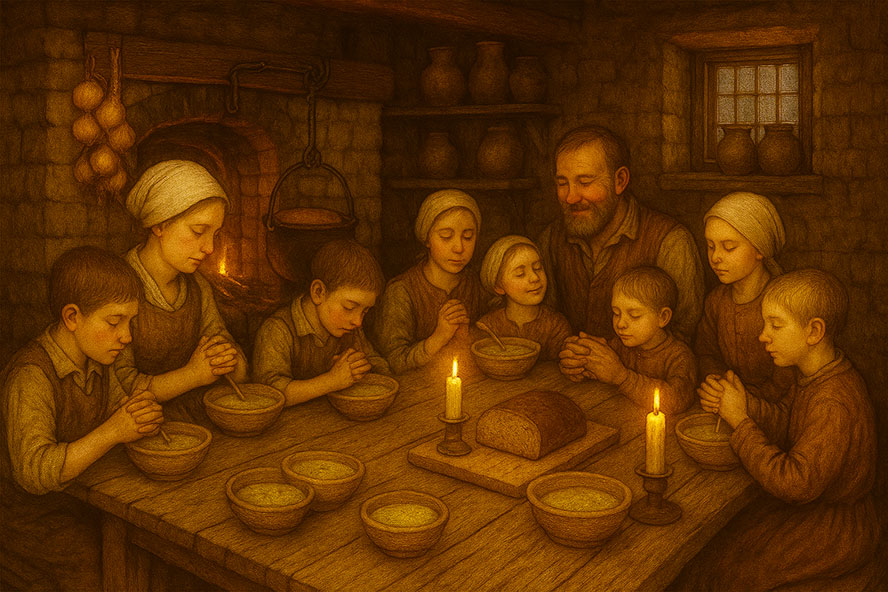
Back at the farmhouse, the soup simmered steadily. Eva stirred it, tasting the broth. The vegetables had softened, the peas were breaking down, and the bacon had given the pot its smoky heart.
Phillip stepped inside, stamping snow from his boots. “The loaves are in,” he said. “Vogel says they’ll be good ones.” Eva added the potatoes
at the last as they would only take 20 minutes to become nice and tender soaking up the flavors.
Eva smiled. “Then it will be a fine Backtag.”
The children gathered around the hearth, warming their hands, the smell of soup filling the room. Outside, the wind pushed against the shutters, but inside the Streib home, the day was unfolding just as it had for generations — with bread rising in the village oven, soup simmering on the fire, and a family working together to meet the winter with warmth and resilience. |
Go Here for a Recipe to make
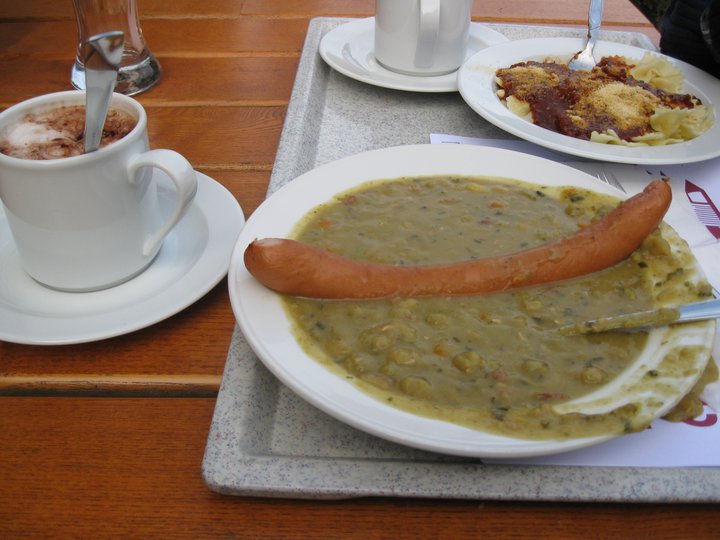
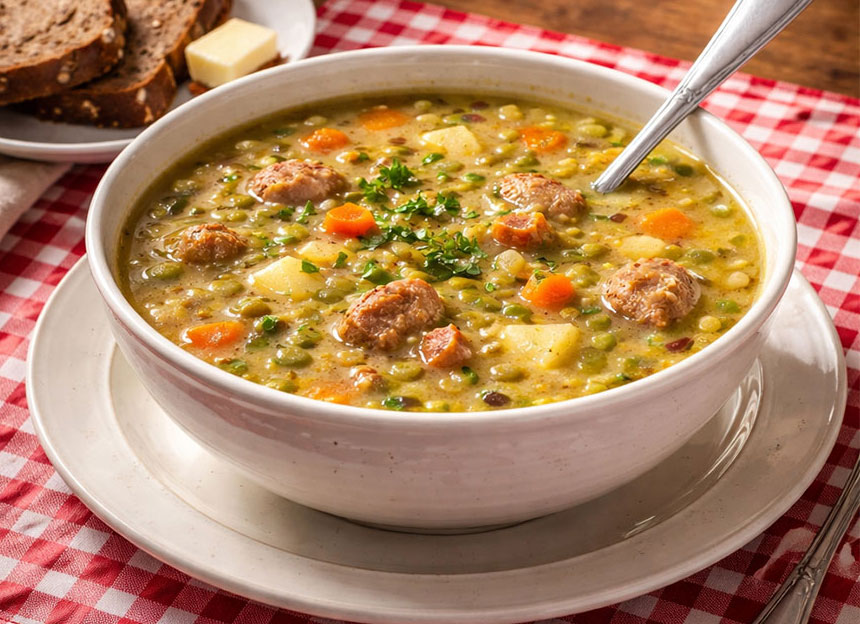
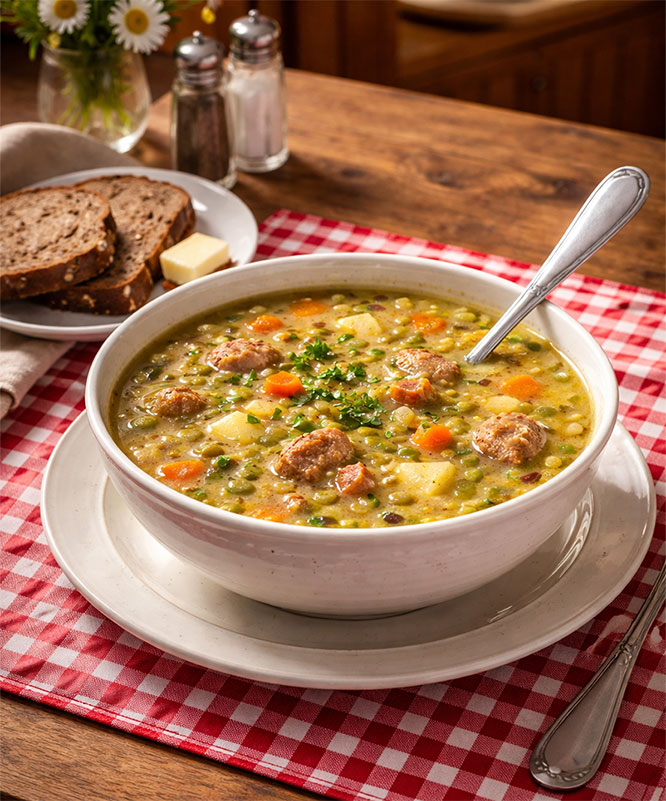
German Split Pea Soup

|
|



 \
\